
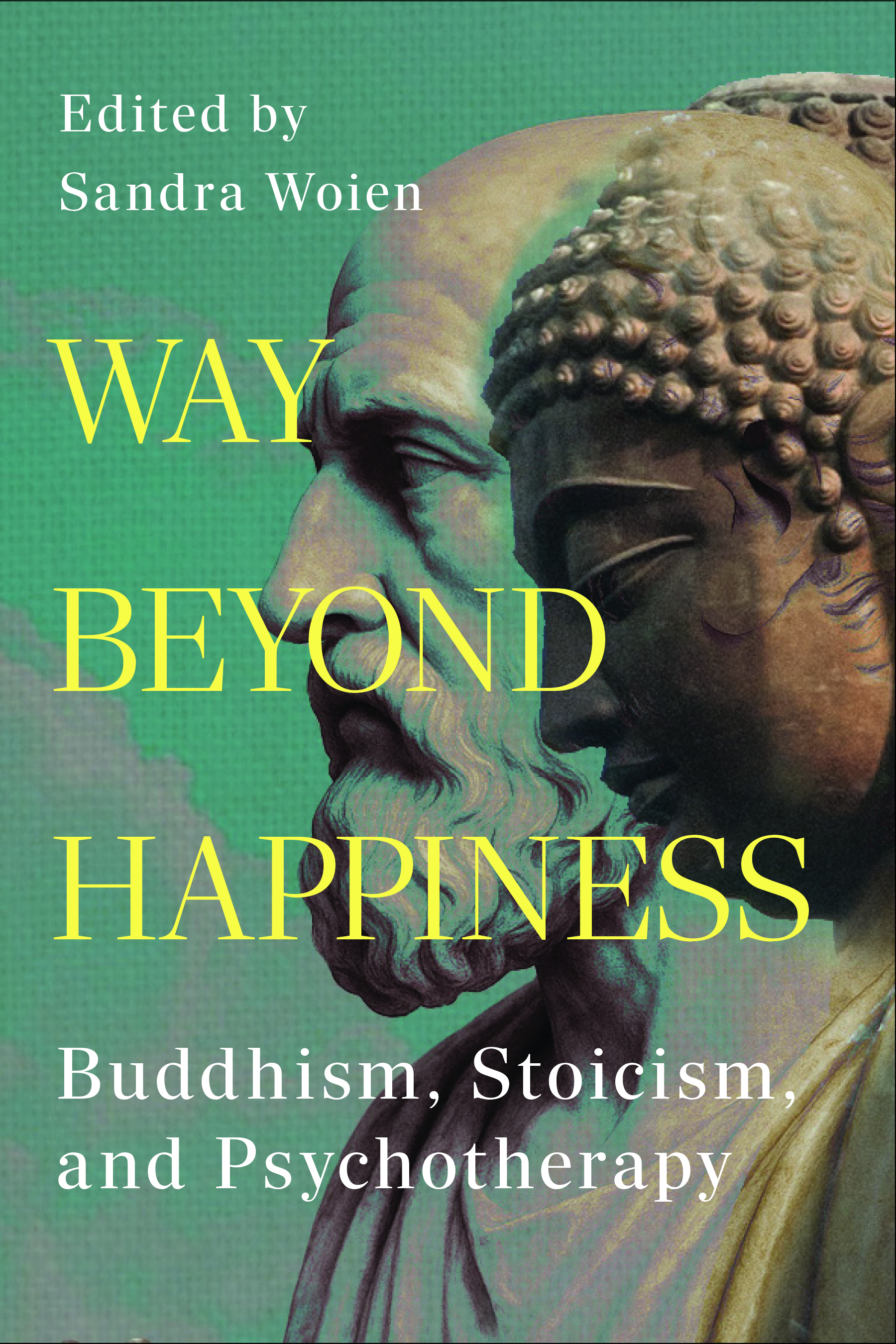
Description
Contributors
LIDIA DENGELEGI ABRAMS is a licensed psychologist in New Jersey and New York, in private practice along with her husband Mike Abrams. She is also executive director of Resolve Community Counseling Center, a private, nonprofit mental health center in New Jersey. Dr. Abrams has completed a postdoctoral fellowship at the Dr. Albert Ellis Institute. She is a certified supervisor, fellow and diplomate of RE/CBT. She has authored or co-authored books, chapters and articles in the field. Most notably, she has co-authored two books with Albert Ellis, along with Mike Abrams. She has written multiple articles on ethical and evidence-based practice and is the chair of the ethics committee of the New Jersey Psychological Association.
MIKE ABRAMS is a board-certified clinician, author, and researcher specializing in sexual problems, mood disorders, and personality differences. He serves as an adjunct full professor in New York University’s MA program in psychology and is an examiner for psychologists pursuing board certification. He operates a clinical practice in New Jersey with his wife and partner, Dr. Lidia D. Abrams. Dr. Abrams has collaborated with and published alongside several pioneers of modern therapy, such as Dr. Albert Ellis, David Buss, and Elizabeth Loftus. His well-reviewed book, The New CBT: Clinical Evolutionary Psychology, combines innovative CBT techniques with evidence-based evolutionary psychology and behavioral genetics. Abrams presents a new clinical approach called Informed Cognitive Therapy. He is currently working on his seventh book, which addresses intimate violence from an evolutionary psychology perspective, and is actively researching the effects of early life trauma on adult sexuality.
JENNIFER BAKER is a professor of philosophy at the College of Charleston. She works on updating Stoic ethics for today and applies it to economics, medical ethics, and behavioral science. She is the author of over two dozen articles on Stoicism and writes for the public at PsychologyToday.com.
AMETHYST BIAS is a Visiting Assistant Professor in the Department of Philosophy at Tulane University in New Orleans and an Oskar Morgenstern Fellow with the Mercatus Institute at George Mason University. Her research spans moral philosophy, applied ethics, and the ethics of emerging technologies, with a focus on digital life, AI systems, and the formation of judgment in online environments. She also writes on love, attention, and the cultivation of virtue in algorithmic spaces. Beyond her academic work, she brings expertise in AI ethics consulting for Nummi, curriculum design, interdisciplinary research, and public-facing philosophical engagement.
MAXIMILIAN BIEZENSKI holds a bachelor’s in philosophy from the University of Regina and MA’s in both Philosophy and Classics from Queen’s University, where he is currently completing a PhD in philosophy. His work focuses on ancient philosophy, and especially on Stoicism’s continued utility for life. His previous thesis, “Stoics Against Coddled Minds” (2024), examines the causes of Stoicism’s current popularity, and defends the Stoic view of emotions against dominant attitudes of hyper-sensitivity and emotional coddling. His other work includes his thesis, “Absurd Games” (2023), a reconciliation between philosophical Absurdism and Eastern Philosophy, and his article, “Cylinders and Doctors: Properly Understanding Stoic Compatibilism” (2024).
DOUGLAS R. CAMPBELL is an Assistant Professor in the Department of Philosophy at Alma College in Michigan. He is from Montreal and received his PhD from the University of Toronto. His research spans a wide range of topics, but it tends to congregate around ancient philosophy and the ethics of social media. He is the author of An Introduction to the Ethics of Social Media, as well as many articles in the Journal of the History of Philosophy, Ancient Philosophy, Apeiron, Ethics and Information Technology, and more.
MARC CHAMPAGNE is a Fellow at the Aristotle Foundation for Public Policy and a tenured faculty member in the Department of Philosophy at Kwantlen Polytechnic University. He is the author of Consciousness and the Philosophy of Signs (2018), Myth, Meaning, and Antifragile Individualism (2020), as well as numerous peer-reviewed articles. He holds a Ph.D. in Philosophy from York University and a Ph.D. in Semiotics from the University of Quebec in Montreal, and he did his post-doctoral studies at the University of Helsinki.
RON DART has taught in the Department of Political Science, Philosophy, and Religious Studies at the University of the Fraser Valley since 1990. He formally retired in 2023 but recently returned to teach courses in political philosophy and peace studies. He also teaches Classics in the graduate department at St. Stephen’s University in New Brunswick. Ron was on staff with Amnesty International in the 1980s and has published forty-two books. His recently republished The North American High Tory Tradition and the Liber Amicorum on his life and writings—The Scholar Gipsy: Thrownness, Memoricide, and the Great Tradition—were both published in 2024. Some of Ron’s more recent books include The Gospel According to Hermes: Intimations of Christianity in Greek Myth, Poetry, and Philosophy (2021), Myth and Meaning in Jordan Peterson: A Christian Perspective (2020), and Hermann Hesse: Phoenix Arising (2019). He has also published many articles on mountaineering and literary reviews for The British Columbia Review. He has served on the National Executive of the Thomas Merton Society for twenty-five years and is the Canadian contact for both the Evelyn Underhill Society and the Bede Griffiths Sangha.
JAMES DILLER is a professor in the Department of Psychological Science at Eastern Connecticut State University, where he has taught since 2008. James earned his master’s and doctoral degrees from West Virginia University after completing his bachelor’s degree at McDaniel College. He has published over twenty-five articles and chapters on topics including the philosophy of radical behaviorism, issues around pedagogy and training of behavior analysts, and factors related to maladaptive choice in human and nonhuman animals.
CHRIS FISHER brings a unique blend of discipline, intellect, and creative vision to his exploration of Stoicism as a way of life. First introduced to Stoic principles during his service in the U.S. Marine Corps, Chris later spent two decades in Silicon Valley working as a computer hardware specialist, software engineer, sales executive, and regional manager for technology companies. In 2004, he transitioned back to public service as a law enforcement officer in Florida. As he approached retirement, Chris turned his lifelong passion for photography into a successful real estate media business. His formal study of Stoicism began at the College of Stoic Philosophers, where he completed the Stoic Essential Studies in 2012 and the Marcus Aurelius School in 2013. He is the author of the Traditional Stoicism blog and the Stoicism on Fire podcast. His written work has appeared in Stoicism Today: Selected Writings II, where he defended the traditional Stoic doctrine of Providence. He also contributed a chapter on Stoicism to the 2019 anthology Pandeism: An Anthology of the Creative Mind. Chris currently resides near Tampa, Florida, where he continues to write, teach, and practice Stoicism.
DARA G. FRIEDMAN-WHEELER is a licensed clinical psychologist and a Research Psychologist at the Center for Psychedelic and Consciousness Research at the Johns Hopkins University School of Medicine. She received her PhD in Clinical Psychology from American University in Washington DC and has experience working with mood and anxiety disorders, suicidality, chronic pain, and substance use disorders. She has published numerous peer-reviewed articles, co-authored the book Being the Change: A Guide for Advocates and Activists on Staying Healthy, Inspired, and Driven with Dr. Jamie S. Bodenlos, and served as Co-Editor for the Sage Encyclopedia of Mood and Anxiety Disorders with Dr. Amy Wenzel. Her interests are in coping, expectancies, culturally-informed empirically supported treatments, and in centering equity and justice.
ADRIAN FURNHAM is a sometime student of Divinity, where he discovered Stoicism. He was brought up in a repressed Calvinistic culture which stressed the importance of fortitude, emotional repression, and control. He holds doctorates from London, Oxford, and Natal University and is the author of one hundred books. He is an Emeritus Professor at the Norwegian Business School and is Commander in the Military Hospitaller Order of Saint Lazarus of Jerusalem.
LEONARD KAHN currently serves as the Dean of the College of Arts and Sciences at Loyola University New Orleans, where he is also the Gerald N. Gaston Distinguished Professor of Religion and Science in the Department of Philosophy. He works on moral theory and its history and has a special interest in the intersection between the philosophy of technology and the ethics of war. Kahn’s doctorate is from the University of Oxford, and he has worked at the University of Reading (UK), the University of Calgary (Canada), the University of North Carolina, Chapel Hill, and the US Air Force Academy. During the 2021–2022 Academic Year, he was the Donald and Beverely Freeman Fellow at the U.S. Naval Academy’s Stockdale Center for Ethical Leadership.
MITCH LEVENTHAL is a professor of educational policy and leadership at the University at Albany, State University of New York. He earned his PhD at the University of Chicago, where he focused on educational entrepreneurship and international political economy. Mitch serves as the President of the Foundation for Stoic Philosophy, a 501(c)(3) corporation that operates the College of Stoic Philosophers.
ASHLEY PRYOR holds a PhD in Philosophy from Penn State and is an Associate Professor in the Department of Philosophy and Religious Studies at the University of Toledo, with an affiliation in the Jesup Scott Honors College. Her work bridges continental philosophy, environmental thought, visual literacy, and Zen Buddhist philosophy. She has published in the Journal for the Study of Religion, Nature, and Culture, as well as in Columbia University Press and Routledge, with notable articles including “Thinking Like a Mystic,” “Heidegger and the Dog-Whisperer,” and “The Conspiracy of the Spectacle.” Pryor is also a visual artist, with creative work appearing in Kolaj Magazine, The Raw Art Review, and Peat Smoke Journal. She is currently completing a manuscript on Dōgen’s Mountains and Rivers Sutra in relation to Aldo Leopold’s “Thinking Like a Mountain.” A community-engaged scholar, she teaches in the Inside-Out Prison Exchange Program and collaborates with underserved communities through International Samaritan, integrating improvisational theater and philosophy in her pedagogy.
TRISTAN J. ROGERS teaches Logic and Latin at Donum Dei Classical Academy in San Francisco. He has also taught philosophy at Santa Clara University, the University of Colorado Boulder, and the University of California, Davis. He is the author of Conservatism, Past and Present: A Philosophical Introduction (Routledge, 2025) and The Authority of Virtue: Institutions and Character in the Good Society (Routledge, 2020).
RAMAN SACHDEV is an Assistant Professor of Philosophy at Clark Atlanta University. His research explores the intersection of ancient wisdom traditions—especially Pyrrhonism, Stoicism, and Buddhism—with modern and contemporary philosophy. He is particularly interested in how these traditions provide practical guidance for emotional resilience, mental health, and the pursuit of the good life. His work has appeared in peer-reviewed journals and public philosophy outlets, and he is currently completing projects on David Hume’s engagement with skepticism and the comparative therapeutic value of ancient philosophies. Prior to joining Clark Atlanta, he held a faculty appointment at Minot State University, where he taught courses in ethics, critical thinking, and the philosophy of religion. His teaching and scholarship reflect a commitment to making philosophy accessible, personally meaningful, and socially relevant. Sachdev holds a PhD in Philosophy from the University of South Florida and an MA in the Humanities from the University of Chicago.
MATTHEW SHARPE teaches philosophy at the Australian Catholic University. He is the author and coauthor of works on the idea of philosophy as a way of life, Albert Camus, and psychoanalytic theory, as well as the popular book, How to Keep Your Head When Those Around You Are Losing Theirs and Blaming You: Stoicism and Bullying.
SANDRA WOIEN served as an Associate Teaching Professor at Arizona State University, where she taught courses on applied ethics, ancient philosophy, and well-being. Although she formally retired in 2025, she continues to teach part-time, sharing her expertise with students. She holds a doctorate in Philosophy and a certificate in Bioethics, Policy, and Law. Before joining ASU, she taught health care ethics at both the undergraduate and graduate levels at Regis University. Her current research explores the relevance of ancient philosophy to questions of ethics, well-being, and human flourishing. She is the editor of Jordan Peterson: Critical Responses (2022) and Sam Harris: Critical Responses (2023), volumes that bring scholarly perspectives to wider audiences. Her work has appeared in The Conversation, American Journal of Bioethics, BMC Medical Ethics, and elsewhere.


Reviews
There are no reviews yet.